
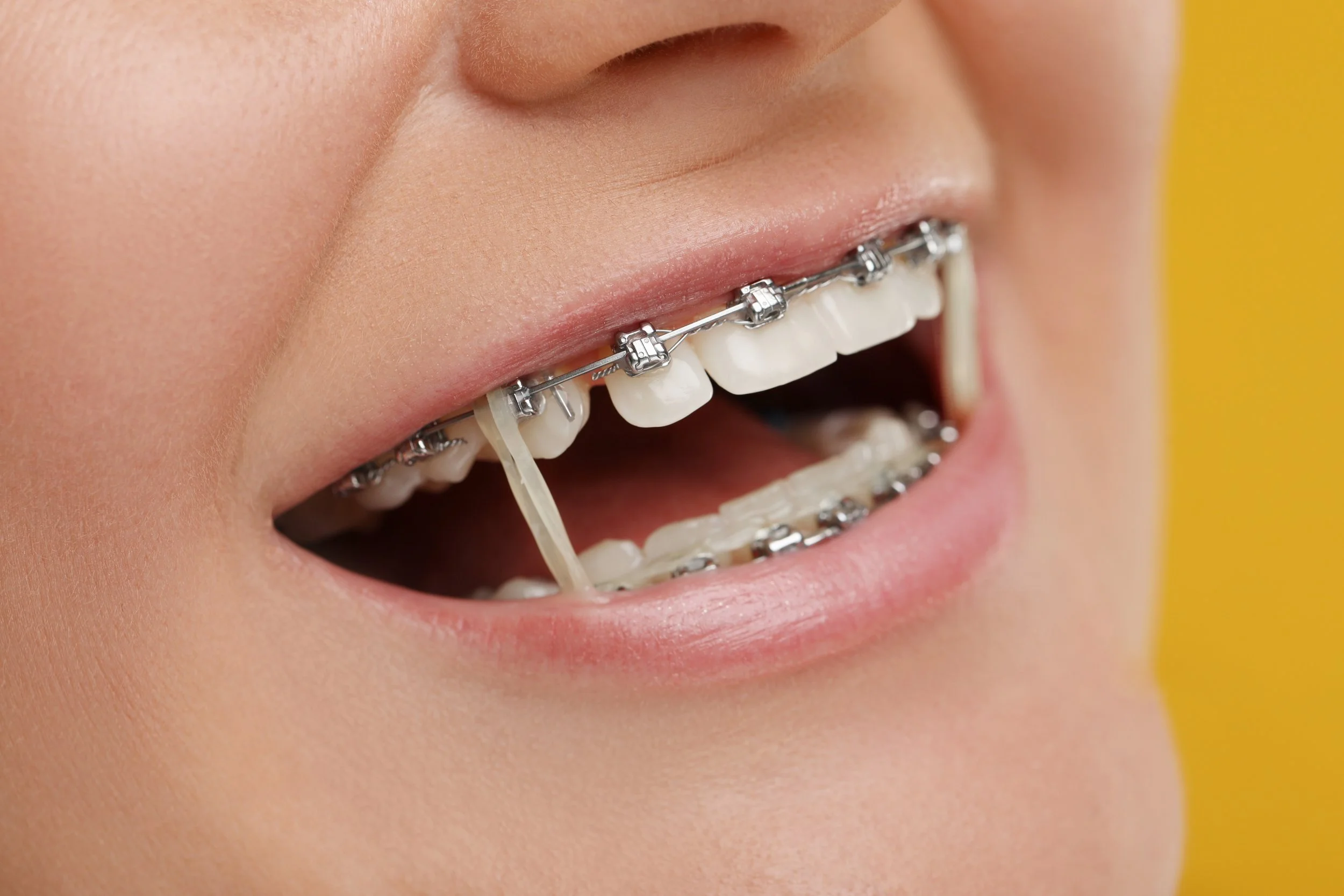
If your teeth don’t come together quite right when you bite down, you’re not imagining it. Bite problems are common in adults, and they can cause more than just discomfort. Headaches, jaw soreness, uneven tooth wear, and even difficulty chewing can all connect back to how your upper and lower teeth align.
The good news is that surgery is not the only path forward. For many adults, orthodontic treatment can correct bite issues effectively without any surgical intervention. Whether you’ve been living with a bite problem since childhood or noticed changes as an adult, it’s worth understanding what your options actually look like.
What Is a Bite Problem, and Why Does It Matter?
A bite problem, or malocclusion, happens when your upper and lower teeth don’t align properly. This can take several forms. An overbite means your upper front teeth overlap too far over your lower ones. An underbite is the reverse. A crossbite happens when some upper teeth sit behind the lower teeth on one or both sides. An open bite leaves a gap between the upper and lower front teeth even when the mouth is closed.
None of these are just cosmetic concerns. Misaligned bites can put excess pressure on certain teeth, wear down enamel unevenly, and strain the jaw joints over time. Left untreated, bite problems can get worse and become more difficult to address down the road.
How Orthodontic Treatment Addresses Bite Issues
For mild to moderate malocclusions, braces and clear aligners can move teeth into positions that correct how the bite functions. The process takes time and precision, but it does not require cutting or restructuring bone in most cases.
Traditional metal braces use brackets and wires to apply steady, controlled pressure that gradually moves teeth. They are well-suited for correcting more significant bite discrepancies because they give the orthodontist very precise control over tooth movement. Ceramic braces work the same way but use clear or tooth-colored brackets for a lower-profile look.
Clear aligners like Invisalign can also address certain bite issues, particularly overbites and mild crossbites. They work through a series of custom trays that shift teeth incrementally over time. However, not every bite problem is a candidate for aligners alone. Your orthodontist will evaluate your specific situation and recommend the approach that fits it.
What Can Be Corrected Without Surgery?
Most mild to moderate bite problems in adults can be treated with orthodontics alone. Overbites, underbites, and crossbites that involve tooth position rather than significant jaw bone discrepancy are often good candidates for non-surgical correction.
Skeletal issues are a different matter. If a bite problem stems from a significant structural difference in the jaw bones themselves, an Orthodontist in Chantilly may recommend consulting with an oral surgeon. But many cases that look serious on the surface can still be resolved through careful tooth movement over time.
The only way to know for certain is an evaluation. X-rays and a clinical exam reveal whether the problem is in the teeth, the jaw structure, or both. That information determines the right path.
Common Myths About Adult Orthodontics and Bites
One thing that holds some adults back is the assumption that bite correction only works well in teenagers. Bone does stop growing after a certain point, which means some jaw-widening approaches are limited in adults. But teeth can still be moved effectively at any age. The biology of tooth movement through bone is the same whether you’re 16 or 46.
Another misconception is that bite problems will work themselves out. They generally don’t. Minor issues can sometimes stay stable for years, but active malocclusions tend to become more pronounced, not less. Addressing a moderate bite problem now is usually simpler than addressing a severe one later.
Adults also sometimes assume that treatment will be obvious. Clear braces and Invisalign have made that concern much less relevant. Most adult patients today have options that are far more discreet than the metal-bracket look many associate with teenage orthodontics.
What the Process Looks Like
At your first appointment, Dr. Anisa Omar reviews your bite, takes records including X-rays, and discusses what the treatment options are for your specific situation. There’s no single answer that fits every patient. Some bite issues respond well to Invisalign; others call for braces; some benefit from additional appliances alongside the main treatment.
Treatment timelines vary too. Minor bite corrections might wrap up in 12 to 18 months. More complex cases can take longer. The key is having a clear plan from the start so you know what to expect at each stage.
Once active treatment ends, retainers keep everything in position. This part matters. Without retention, teeth can drift back, and bite improvements can gradually reverse.
Schedule a Consultation at Omar Orthodontics
Omar Orthodontics serves patients across Chantilly, South Riding, and surrounding Northern Virginia communities. Call Dr. Anisa Omar’s office at (703) 542-6336 to book your free consultation and find out which treatment option fits your bite.