
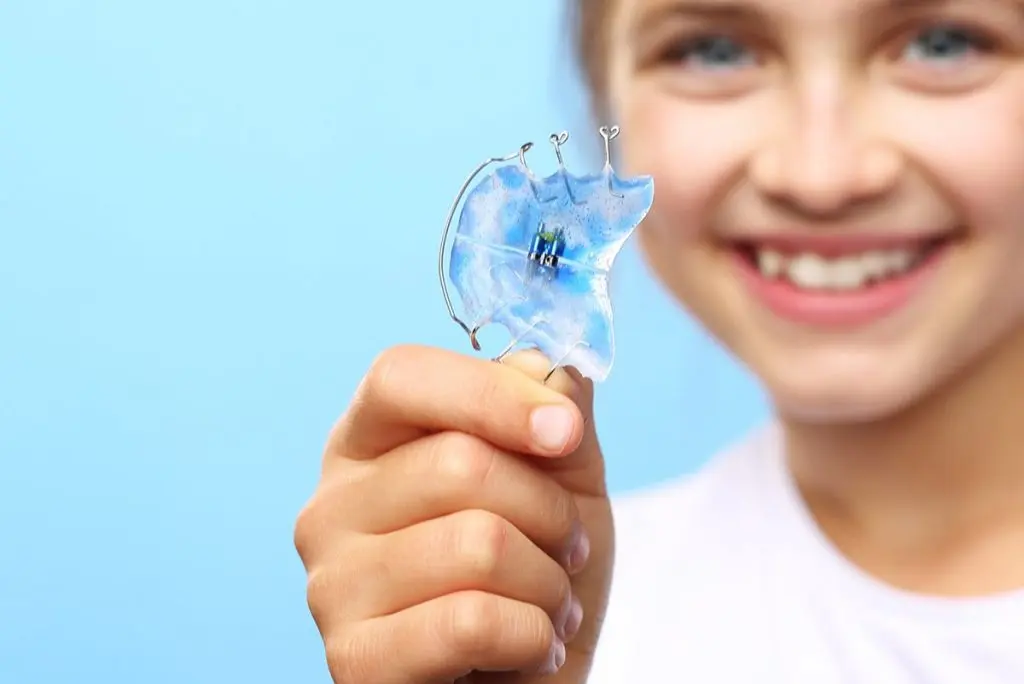
If your child’s dentist has mentioned orthodontics, or you’ve noticed crowding or bite issues starting to appear, you’ve probably wondered whether to act now or hold off. It’s a common debate among parents, and there’s no single answer that fits every child. What matters is understanding what early treatment can actually accomplish and when waiting makes more sense.
The right timing depends on what’s going on in your child’s mouth specifically. A few things are genuinely easier to address early. Others are better handled once more permanent teeth have come in.
What Early Orthodontic Treatment Actually Means
Early orthodontic treatment, sometimes called Phase 1 treatment, typically happens between ages 7 and 10. The American Association of Orthodontists recommends that children have their first orthodontic evaluation by age 7. At that point, enough permanent teeth have come in for an orthodontist to assess how the bite is developing and whether any intervention makes sense.
This doesn’t mean every 7-year-old needs braces. Most don’t. But it does mean an orthodontist can catch issues early enough to address them before they become harder to manage. An orthodontist in Chantilly like Dr. Anisa Omar can identify problems that aren’t always visible to parents or general dentists during routine checkups.
Problems That Respond Well to Early Treatment
Some orthodontic issues are genuinely easier to correct when a child’s jaw is still growing. Bone at this stage is more adaptable, which means certain structural problems can be guided rather than corrected after the fact.
Crossbites
A crossbite, where upper teeth sit inside the lower teeth on one or both sides, can cause the jaw to shift to one side as it grows. Catching this early and using an appliance to widen the upper arch can prevent that shift from becoming permanent.
Underbites
When the lower jaw protrudes forward of the upper, early intervention can help guide jaw development in a more favourable direction. Waiting until the jaw is fully grown limits what orthodontics alone can accomplish.
Severe Crowding
If a child’s jaw is clearly too small to accommodate incoming permanent teeth, early treatment can create space. This sometimes reduces or eliminates the need for extractions later on.
Habits That Affect Jaw Development
Prolonged thumb sucking or pacifier use past age 4 or 5 can push teeth forward and affect how the upper arch develops. Early evaluation can identify whether any damage has occurred and whether intervention is needed.
When Waiting Makes More Sense
Here’s the part that often surprises parents: most orthodontic issues don’t require early treatment. Crowding, spacing, mild overbites, and rotated teeth are usually addressed more efficiently once all the permanent teeth have come in, typically around ages 11 to 13.
Treating too early, when baby teeth are still present and jaw growth is unpredictable, can mean a patient goes through two full rounds of treatment. Phase 1 addresses one set of problems, and then Phase 2 handles everything that develops later. That’s more time in treatment and more cost overall.
For most kids, a single well-timed course of treatment in the early teen years accomplishes everything that needs to be done. The key is having an orthodontist track development over time so nothing slips through.
How Orthodontists Actually Make This Decision
At an initial evaluation, Dr. Anisa Omar reviews current tooth positioning, takes X-rays to see what’s happening beneath the gumline, and assesses how the jaw is developing. The question isn’t just what’s visible now; it’s what’s coming. Permanent teeth that haven’t erupted yet can already be tracked on X-rays, and an experienced orthodontist can anticipate whether space will be a problem.
From there, the recommendation might be to start treatment right away, to monitor every six months and wait for the right window, or to schedule a follow-up closer to the teen years. All three of those are legitimate outcomes depending on the child. Parents who visit a pediatric orthodontist in South Riding for an early evaluation aren’t committing to treatment; they’re getting accurate information.
The Practical Case for an Early Evaluation
Even if early treatment isn’t needed, an evaluation at age 7 or 8 gives you a baseline. You know what’s developing normally, what needs watching, and what the likely timeline looks like for your child. That’s more useful than waiting until a problem is obvious and then scrambling to address it.
It also gives your child time to get comfortable with the orthodontic environment before treatment begins. Kids who’ve been coming in for monitoring appointments tend to handle the transition to active treatment more easily than those who walk into their first appointment and leave with braces on the same day.
For families in the Chantilly and South Riding area, Omar Orthodontics offers free consultations. There’s no cost to getting that initial picture of where your child stands.
Schedule Your Child’s Orthodontic Evaluation at Omar Orthodontics
Omar Orthodontics offers free consultations for children and teens across Chantilly, South Riding, and surrounding Northern Virginia communities.
Call Dr. Anisa Omar’s office at (703) 542-6336 to schedule an evaluation and find out what’s right for your child’s smile.