
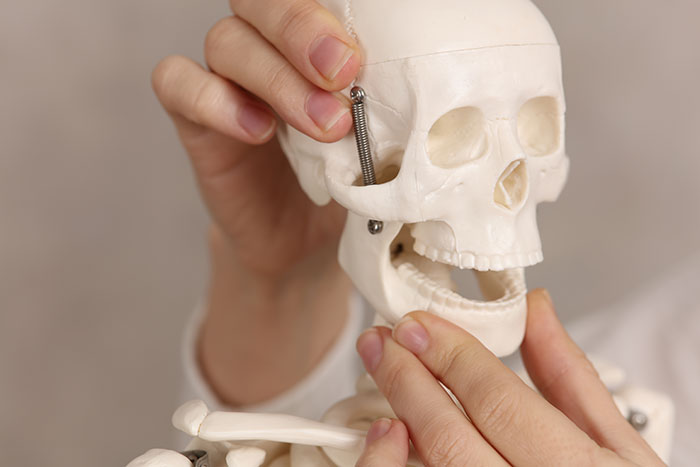
Straightening teeth is only part of what orthodontic treatment can address. Dentofacial orthopedics focuses on something broader: guiding how the jaw and facial bones develop while a child or teen still has growth left to work with.
What Dentofacial Orthopedics Actually Means
Jaw Growth, Not Just Tooth Position
Dentofacial orthopedics refers to treatment aimed at guiding the growth and positioning of the jaw and facial bones, rather than simply moving individual teeth into alignment. It’s a distinct area within orthodontics that works with the skeletal structure underneath the smile.
Why Timing Is Everything
This type of treatment depends heavily on a child or teen’s growth window. Because bones respond to guided forces differently while still developing, treatment that would be effective at age eight may not have the same impact once jaw growth has slowed or stopped in early adulthood.
Why Jaw Growth Matters Beyond the Smile
The Jaw Affects More Than Appearance
Jaw position and size influence how the upper and lower teeth meet, how much room exists for permanent teeth to come in, and in some cases, breathing and airway space. A jaw that’s too narrow or misaligned can affect several of these areas at once.
Skeletal Issues Versus Tooth Issues
Some bite problems come from the position of individual teeth, which orthodontics can correct through straightening alone. Others stem from the jaw bones themselves being too far forward, too far back, or too narrow, which requires a different approach focused on the skeletal structure rather than tooth movement.
Common Issues Dentofacial Orthopedics Addresses
Narrow Upper Jaw
A palatal expander is one of the more commonly used tools in this area, gradually widening the upper jaw over time to create more space for permanent teeth and correct certain bite issues, such as a crossbite.
Overbite and Underbite Patterns
Some appliances are designed to guide the lower jaw forward or hold the upper jaw back slightly, addressing significant overbite or underbite patterns while the jaw still has the flexibility to respond to that guidance.
Crowding Related to Jaw Size
When crowding stems from a jaw that’s simply too small to comfortably fit all the incoming permanent teeth, dentofacial orthopedic treatment can create additional space before crowding becomes more severe.
How This Differs From Traditional Braces
Working With Bone, Not Just Teeth
Traditional braces move teeth within the existing bone structure. Dentofacial orthopedic appliances work with the bone itself, gradually reshaping the jaw’s growth pattern during a period when that’s still biologically possible.
Often Used as an Earlier Phase
Because this type of treatment depends on active growth, it’s often introduced earlier than traditional braces, sometimes as part of what’s called a first phase of treatment, with braces or Invisalign following later once more permanent teeth have come in.
Why an Early Evaluation Matters
Age Seven Is a Common Starting Point
Many orthodontists recommend an initial evaluation around age seven, not because treatment necessarily starts then, but because enough permanent teeth have typically come in to reveal whether jaw growth is following a typical pattern.
Catching Issues While There’s Still Time to Guide Them
Waiting until all growth has finished removes the option to guide jaw development non-surgically. This is part of why earlier evaluation matters specifically for issues related to jaw size and position, even if crowding alone doesn’t seem urgent yet.
What an Evaluation for Dentofacial Orthopedics Involves
Assessing Growth and Jaw Relationship
An evaluation typically includes X-rays to assess jaw position and growth pattern, along with a discussion of any habits, such as mouth breathing or thumb sucking, that could be affecting development.
Determining if Intervention Is Needed
Not every child evaluated needs treatment right away. In many cases, the orthodontist in Chantilly monitors growth over time and recommends starting treatment only if a specific issue becomes clear as more permanent teeth come in.
What Treatment Typically Looks Like
Appliances Suited to the Specific Issue
Depending on what’s being addressed, treatment might involve a palatal expander, a functional appliance to guide jaw position, or another tool suited to the specific growth pattern being corrected.
A Second Phase May Follow
For many patients, dentofacial orthopedic treatment is followed by a second phase involving braces or Invisalign once more permanent teeth have erupted, addressing final tooth alignment after the jaw structure has been guided into a better position.
Is This Right for Every Child?
It Depends on the Specific Growth Pattern
Not every child needs this type of treatment. Some crowding and bite issues resolve well with traditional orthodontics alone once all permanent teeth have come in, without requiring earlier jaw-focused intervention.
An Evaluation Provides Clarity
Because every child’s growth pattern is different, an evaluation is the most reliable way to determine whether dentofacial orthopedics would benefit your child’s specific situation.
Talk to Omar Orthodontics About Your Child’s Jaw Development
If you’re noticing signs of a narrow jaw, a significant overbite, or you simply want an early evaluation for your child, our team can help determine whether dentofacial orthopedics treatment in South Riding is worth considering now.
Call (703) 542-6336 to schedule a consultation with Omar Orthodontics.